Lowcountry shrimp and grits as a breakfast bowl: grits simmered in milk and water until creamy and finished with a little sharp cheddar, shrimp seared with smoked paprika, garlic and red pepper, a quick pan sauce of stock, lemon and butter, and a fried egg on top. Smoked paprika does the job bacon does in most versions, so the bowl gets its smoky depth without the bacon fat.
Forty minutes, most of it the grits simmering on their own while the shrimp take five minutes in a 12-inch skillet. Buy old-fashioned (regular) grits, not instant; stone-ground grits are better still but need 45 minutes. Buy raw shrimp already peeled and deveined, 26 to 30 per pound; frozen is fine, thawed overnight in the fridge or under cold running water. A quarter of the pot is a serving.
Why this one works
A pound of shrimp and four eggs carry the protein, with milk and cheddar in the grits adding to it: 37 g protein per bowl, 23 g from the shrimp and 6 g from the egg.
The grits cook in part milk and take one ounce of cheddar instead of a stick of butter and cream; 60 kcal per bowl come from the milk and cheese.
Smoked paprika replaces the bacon, and low-sodium stock makes the pan sauce: 580 mg sodium per bowl, 290 mg of it the measured salt in the grits.
The shrimp cook in 3 minutes while the grits simmer; the bowl comes to $3.09 a serving, $2.00 of it the shrimp.
Ingredient notes
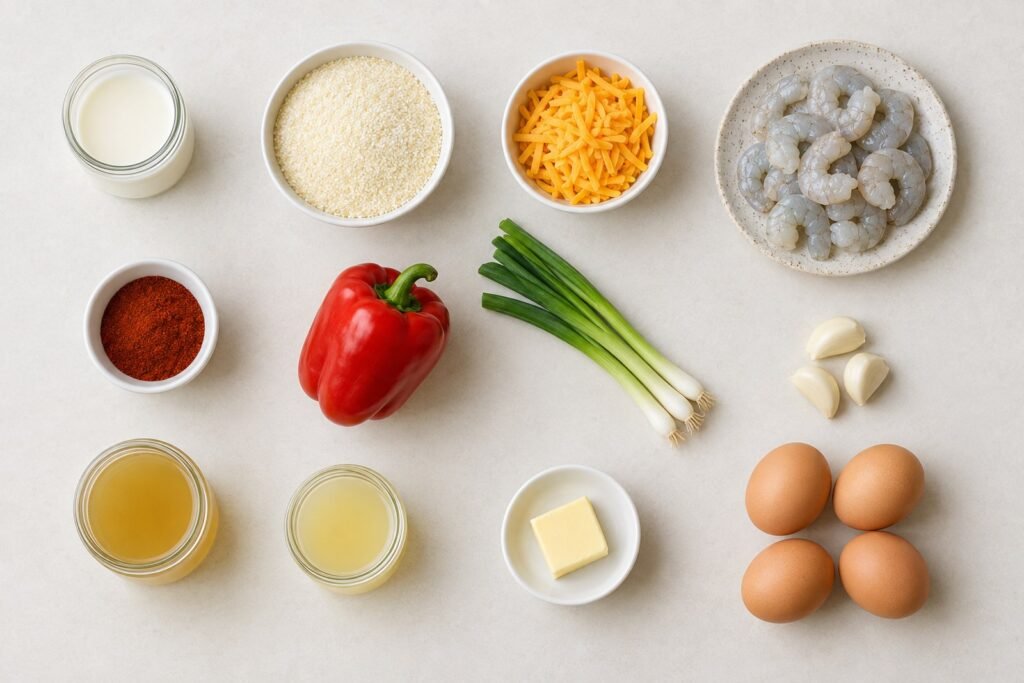
Old-fashioned grits (¾ cup / 120 g dry). Regular white or yellow corn grits, which take about 20 minutes. Not instant. We computed them as FoodData Central's dry enriched white corn grits. Raw shrimp, peeled and deveined (1 lb / 454 g peeled weight). Weighed after peeling. If you buy shell-on, start with about 1¼ lb. Sharp cheddar (1 oz / 28 g). A small amount of sharp cheese flavors the pot better than a larger amount of mild. Low-sodium chicken stock (½ cup / 120 ml). Deglazes the skillet into a sauce that seasons the grits around it.
Scales every quantity and the servings count. The panel stays per serving.
3 cups(720 ml) water
1 cup(244 g) 2% milk
¾ cup(120 g) old-fashioned grits
½ tsp(3 g) fine salt
1 oz(28 g) sharp cheddar, shredded
1 lb(454 g) raw shrimp, peeled and deveined
1 tsp(2.3 g) smoked paprika
1 tbsp(13.5 g) olive oil, divided
1red bell pepper (150 g), diced
3scallions (45 g), whites and greens sliced separately
3garlic cloves (9 g), minced
½ cup(120 ml) low-sodium chicken stock
1 tbsp(15 ml) lemon juice
1 tbsp(14 g) unsalted butter
4large eggs (200 g)
Hot sauce, optional
Method
Bring the water, milk and salt to a simmer in a 3-quart saucepan. Whisk in the grits in a slow stream.
Cover and cook over low 20 minutes, whisking every 5 minutes and scraping the corners, until thick and creamy. Stir in the cheddar off the heat and keep covered.
Pat the shrimp dry and toss with the paprika.
Heat 2 tsp of the oil in a 12-inch skillet over medium-high. Cook the bell pepper and scallion whites 4 minutes, until the pepper softens.
Add the shrimp in one layer with the garlic. Cook 1½ minutes per side, until pink and just opaque.
Add the stock and lemon juice and scrape the pan. Simmer 1 minute, then swirl in the butter off the heat. Move everything to a bowl.
Wipe the skillet, add the remaining 1 tsp oil and heat over medium. Fry the eggs, covered, 3 minutes, until the whites set and the yolks stay soft.
Divide the grits among four bowls. Top with the shrimp and sauce, an egg and the scallion greens.
Cook’s note
Pull the shrimp the moment they curl into a loose C and turn opaque; a tight O means overcooked, and they keep cooking in the hot sauce.
Storage
Grits and shrimp keep 3 days in the fridge, stored separately. Grits set firm; whisk them over low heat with ¼ cup water or milk per serving, 4 minutes. Rewarm the shrimp gently in a covered skillet, 2 minutes. Fry the eggs fresh. Does not freeze well.
Nutrition
Nutrition Facts
4 servings per recipeServing size 1 of 4 servings
Calories per serving415
% Daily Value*
Total Fat 16g
21%
Saturated Fat 6g
30%
Sodium 580mg
25%
Total Carbohydrate 32g
12%
Dietary Fiber 2.5g
9%
Total Sugars 6g
Protein 37g
74%
* The % Daily Value tells you how much a nutrient in a serving of food contributes to a daily diet. 2,000 calories a day is used for general nutrition advice.
How this panel was built
Every ingredient in this recipe is mapped to a USDA FoodData Central entry and the panel is computed from those entries for one serving as written. Optional ingredients and anything "to taste" are excluded. Values are rounded: protein to the gram, calories to the nearest 5 and sodium to the nearest 10 mg. The panel is calculated, not lab-tested; a different brand of stock or cheese will move sodium and fat. Cost per serving is an estimate at national-average store-brand prices; your store will differ.