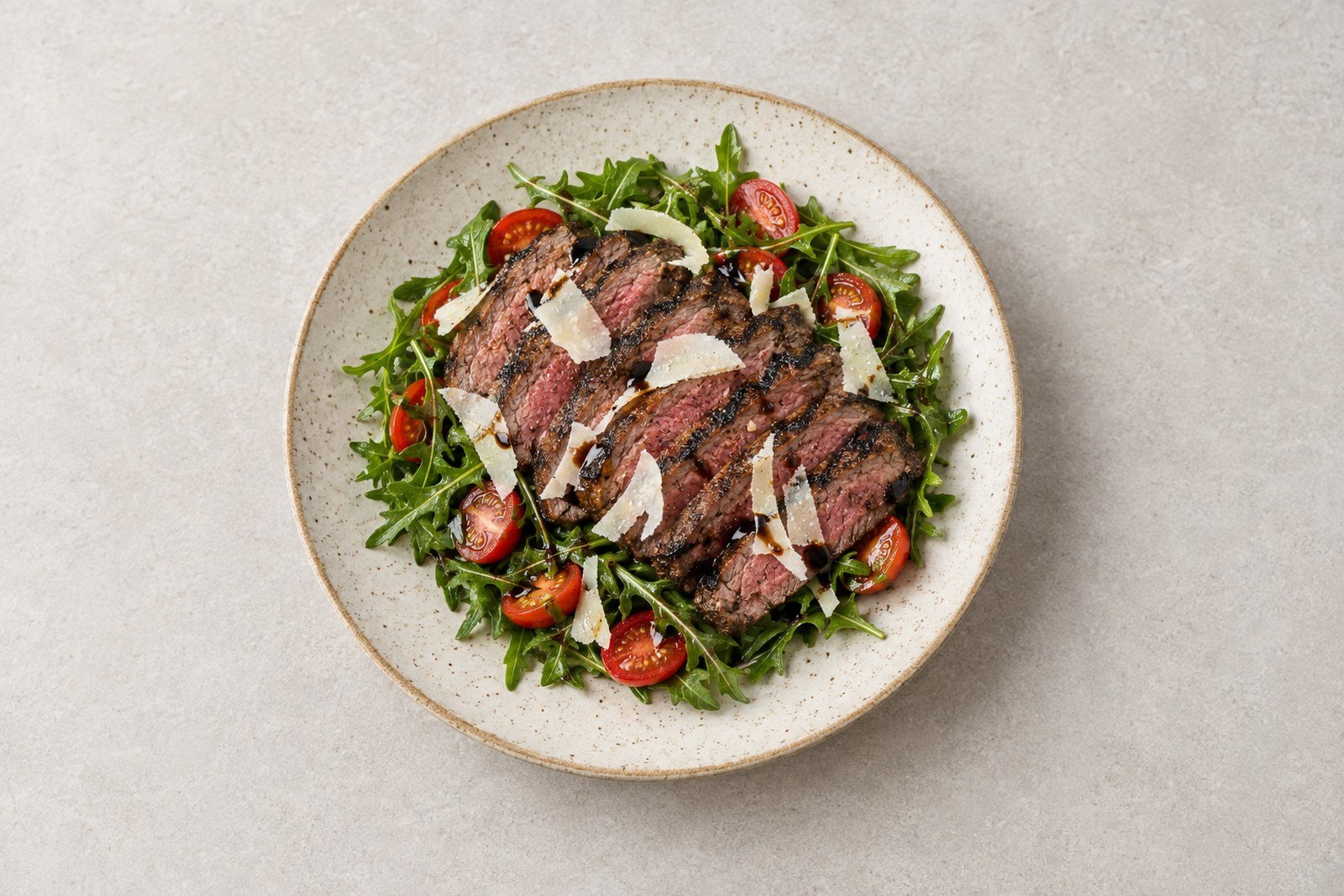
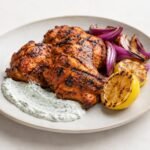
Tagliata means “cut”: a thick steak grilled hard, rested, sliced thin across the grain and laid over peppery arugula with cherry tomatoes and shaved parmesan, dressed with olive oil, lemon and a few drops of balsamic. Tuscan cooks use a bistecca or rib-eye; we use top sirloin, which is lean, takes a rosemary and garlic rub well, and stays tender when sliced thin.
Under 40 minutes, including the 10-minute rest that keeps the juices in the meat instead of on the board. Ask for one top sirloin steak about 1¼ inches thick; thinner steaks go grey inside before they char. Arugula wilts under warm steak within minutes, which is part of the dish if you eat it right away. For a packed lunch, slice the steak cold and keep the greens apart.
Why this one works
Top sirloin is a lean grilling steak, 8 g fat per plate from the meat, and one 1½ lb steak shared four ways gives 37 g of the 44 g protein.
Parmesan shaved with a peeler covers the plate with only 15 g of cheese per serving, which brings 5 g protein from the cheese and 180 mg sodium.
Two tablespoons of olive oil for four servings, split between the rub and the greens, and we count a quarter of the grate oil as eaten: 19 g fat per plate.
Resting the steak is counted in the time, 10 of the 37 minutes, because cutting it straight off the grill floods the board.
Ingredient notes
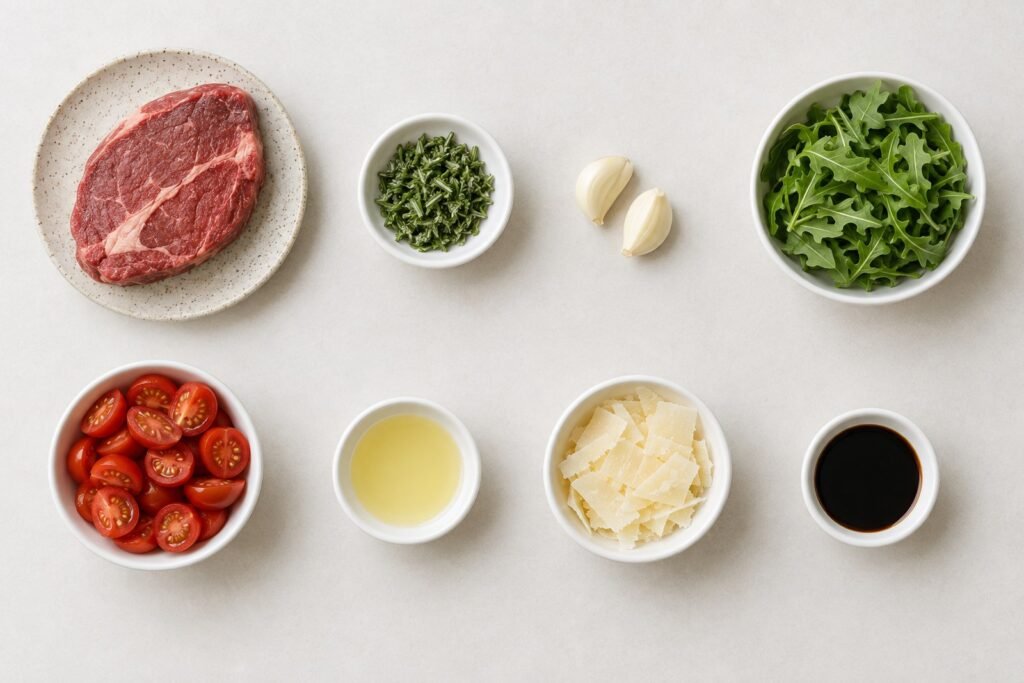
Top sirloin steak (1½ lb / 680 g). One piece, 1¼ inches thick, trimmed of the outer fat cap. Flank steak works too; see the swaps. The ¾ tsp salt in the rub is the largest part of the 720 mg sodium per plate, about 440 mg; ½ tsp takes off 150 mg. Parmesan (2 oz / 60 g). A wedge of Parmigiano-Reggiano, shaved with a vegetable peeler into wide curls. Pre-grated cheese clumps on wet greens. Baby arugula (5 oz / 140 g). One clamshell. Spinach or a mix of arugula and romaine for less pepper. Balsamic vinegar (1 tbsp / 15 g). Any supermarket bottle; a few drops go over the meat at the end, not into the dressing.
Scales every quantity and the servings count. The panel stays per serving.
1½ lb(680 g) top sirloin steak, 1¼ inches thick, trimmed of visible fat
1 tbsp(14 g) olive oil, for the steak
1 tbsp(2 g) fresh rosemary, finely chopped
2garlic cloves (6 g), finely grated
¾ tsp(4.5 g) fine salt
½ tsp(1 g) black pepper
1 tsp(4.5 g) canola oil, for the grates
5 oz(140 g) baby arugula
1 pint(300 g) cherry tomatoes, halved
1 tbsp(14 g) olive oil, for the greens
1 tbsp(15 g) lemon juice
2 oz(60 g) parmesan, shaved
1 tbsp(15 g) balsamic vinegar
Flaky salt, optional
Method
Pat the steak dry. Rub it all over with the oil, rosemary, garlic, salt and pepper and leave at room temperature while the grill heats.
Heat the grill to high, 500 °F (260 °C) or hotter, lid closed, for 10 to 15 minutes. Brush the grates clean and oil them with a folded paper towel held in tongs.
Grill the steak 5 to 6 minutes per side with the lid closed, without moving it, until well charred.
Pull it at 125 °F (52 °C) at the center for medium-rare or 135 °F (57 °C) for medium. USDA's guideline for whole cuts of beef is 145 °F (63 °C) with a 3-minute rest.
Rest the steak on a board 10 minutes.
Toss the arugula and tomatoes with the olive oil and lemon juice and spread on a platter.
Slice the steak across the grain, ¼ inch thick, and lay the slices over the greens. Scatter the parmesan, drizzle with the balsamic and add flaky salt if you like.
Cook’s note
Look for the lines running along the steak and cut straight across them; with sirloin, slicing with the grain instead of across it is the difference between tender slices and chewy strips.
Storage
Refrigerate the sliced steak up to 3 days, with the greens, tomatoes and parmesan packed separately and dressed at lunch. Does not freeze well once sliced. It is meant to be eaten cold or at room temperature; reheating overcooks it.
Nutrition
Nutrition Facts
4 servings per recipeServing size 1 of 4 servings
Calories per serving385
% Daily Value*
Total Fat 19g
24%
Saturated Fat 6g
30%
Sodium 720mg
31%
Total Carbohydrate 6g
2%
Dietary Fiber 1.5g
5%
Total Sugars 3.5g
Protein 44g
88%
* The % Daily Value tells you how much a nutrient in a serving of food contributes to a daily diet. 2,000 calories a day is used for general nutrition advice.
How this panel was built
Every ingredient in this recipe is mapped to a USDA FoodData Central entry and the panel is computed from those entries for one serving as written. Optional ingredients and anything "to taste" are excluded. Values are rounded: protein to the gram, calories to the nearest 5 and sodium to the nearest 10 mg. The panel is calculated, not lab-tested; a different brand of stock or cheese will move sodium and fat. Cost per serving is an estimate at national-average store-brand prices; your store will differ.