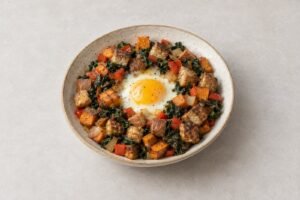
A diner-style hash with tempeh in place of corned beef: cubes of tempeh tossed in soy sauce and smoked paprika and seared until crusty, sweet potato steamed and then browned in the same skillet, red pepper, onion and kale, and an egg fried on top of each portion. Tempeh holds its shape in a hot pan the way tofu does not, and it brings a nutty, savory note that stands up to the sweet potato.
One 12-inch skillet, heavy nonstick or well-seasoned cast iron, and 40 minutes. The sweet potato goes in with a splash of water under a lid for 5 minutes so it cooks through before it browns, which saves you par-boiling. Any plain soy tempeh works; skip the flavored, pre-marinated packs. Half the skillet with one egg is a serving.
Why this one works
The tempeh supplies most of the protein and the fried egg adds the rest: 34 g protein per serving, 23 g of it from the tempeh and 6 g from the egg.
Sweet potato steamed under a lid, then uncovered to brown, needs 2 tsp of oil for the whole pan, which adds 40 kcal per serving.
Low-sodium soy sauce on the tempeh does the seasoning, so the added salt is ¼ tsp; the two together are 580 of the 740 mg sodium per serving.
Kale wilts into the hash in the last 2 minutes; the tempeh (8 g) and sweet potato (3 g) supply most of the 15 g fiber per serving.
Ingredient notes
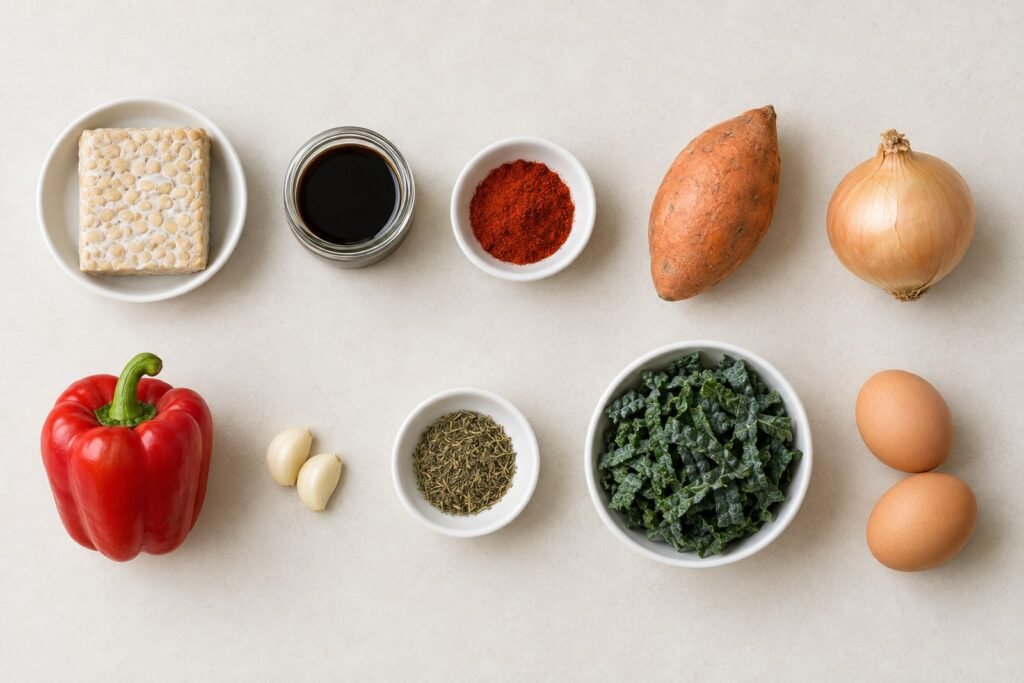
Tempeh (8 oz / 227 g). Plain soybean tempeh. If yours tastes bitter, simmer the cubes in water for 5 minutes before seasoning; most supermarket tempeh does not need it. It brings 23 g protein and 8 g fiber per serving, and at $1.75 it is the largest part of the $3.30 a serving. Sweet potato (1 small / 200 g). Orange-fleshed, scrubbed and left unpeeled, cut into ½-inch dice so it cooks in the time the tempeh rests. Low-sodium soy sauce (1 tbsp / 16 g). Tossed with the tempeh before searing; it browns into the crust. Lacinato kale (2 cups / 60 g). Stems stripped, leaves chopped. Curly kale or baby spinach work; spinach needs only 30 seconds.
Scales every quantity and the servings count. The panel stays per serving.
8 oz(227 g) tempeh, cut into ½-inch cubes
1 tbsp(16 g) low-sodium soy sauce
1 tsp(2.3 g) smoked paprika
2 tsp(9 g) olive oil, divided
1small sweet potato (200 g), scrubbed and cut into ½-inch dice
3 tbsp(45 ml) water
1small yellow onion (100 g), diced
1red bell pepper (120 g), diced
2garlic cloves (6 g), minced
½ tsp(0.5 g) dried thyme
2 cups(60 g) chopped lacinato kale
¼ tsp(1.5 g) fine salt
¼ tsp(0.5 g) black pepper
2large eggs (100 g)
Hot sauce, optional
Method
Toss the tempeh with the soy sauce and paprika in a bowl.
Heat 1 tsp of the oil in a 12-inch skillet over medium-high. Sear the tempeh in one layer, turning once, 5 to 6 minutes, until browned on two sides. Move it to a plate.
Add the remaining 1 tsp oil, the sweet potato and the water to the skillet. Cover and cook 5 minutes over medium, until a knife slides into the cubes with slight resistance.
Uncover, add the onion and bell pepper, and cook 6 minutes, stirring every 2 minutes, until the sweet potato browns at the edges and the onion softens.
Stir in the garlic, thyme, salt and pepper for 30 seconds. Return the tempeh, add the kale and toss 2 minutes, until the kale wilts.
Make two wells in the hash and crack an egg into each. Cover and cook over medium-low 3 to 4 minutes, until the whites are set and the yolks still soft.
Cook’s note
Sear the tempeh first and take it out; if it cooks alongside the sweet potato for the whole time it steams and loses its crust.
Storage
The hash without eggs keeps 4 days in the fridge. Reheat in a skillet over medium, 5 minutes, then fry fresh eggs on top. It does not freeze well; the sweet potato turns soft.
Nutrition
Nutrition Facts
2 servings per recipeServing size 1 of 2 servings
Calories per serving475
% Daily Value*
Total Fat 22g
28%
Saturated Fat 5g
25%
Sodium 740mg
32%
Total Carbohydrate 41g
15%
Dietary Fiber 15g
54%
Total Sugars 9g
Protein 34g
68%
* The % Daily Value tells you how much a nutrient in a serving of food contributes to a daily diet. 2,000 calories a day is used for general nutrition advice.
How this panel was built
Every ingredient in this recipe is mapped to a USDA FoodData Central entry and the panel is computed from those entries for one serving as written. Optional ingredients and anything "to taste" are excluded. Values are rounded: protein to the gram, calories to the nearest 5 and sodium to the nearest 10 mg. The panel is calculated, not lab-tested; a different brand of stock or cheese will move sodium and fat. Cost per serving is an estimate at national-average store-brand prices; your store will differ.