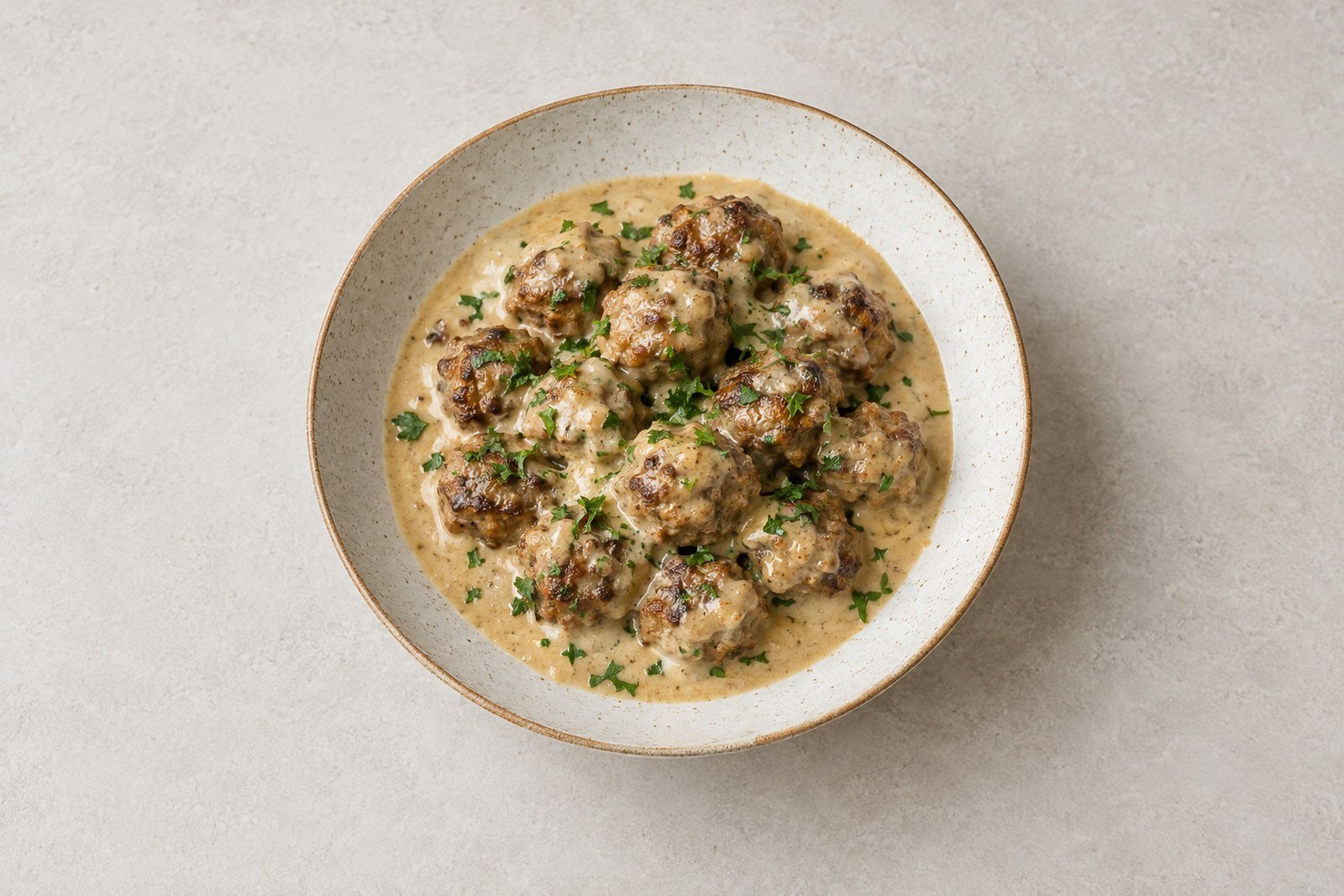
Swedish meatballs are the warm-spiced comfort classic of the holiday table: tender beef and pork meatballs scented with allspice and nutmeg in a creamy gravy. Ours keeps the spice and the gravy but uses leaner ground meat and finishes the sauce with Greek yogurt instead of heavy cream.
About 50 minutes in one skillet: the meatballs brown first, then the gravy comes together in the same pan and they simmer in it until cooked through. Stir the yogurt in off the heat so it stays smooth. Serve them over Greek yogurt mashed potatoes for the classic plate.
Why this one works
93% lean beef and 90% lean pork: 35 g of the 43 g protein per serving.
Greek yogurt finishes the gravy in place of heavy cream: 3 g protein per serving and under 1 g fat.
Half a teaspoon of allspice and a quarter of nutmeg for 24 meatballs give the classic spicing.
One skillet, $3.11 a serving, with 690 mg sodium.
Ingredient notes
Ground beef and pork. 93% lean beef with 90% lean pork gives a tender meatball with plenty of flavor and less fat than the usual mix. Panko and milk. Soaked together, they keep the lean meat from turning dense. Allspice and nutmeg. These two make them taste Swedish. Use a light hand with the nutmeg. Greek yogurt (½ cup / 120 g). Plain 2%; bring it to room temperature and stir it in off the heat so it doesn't curdle.
Scales every quantity and the servings count. The panel stays per serving.
½ cup(30 g) panko
¼ cup(60 ml) 2% milk
1 lb(450 g) 93% lean ground beef
8 oz(225 g) 90% lean ground pork
1large egg
1small yellow onion (75 g), grated
½ tsp(1 g) ground allspice
¼ tsp(0.5 g) ground nutmeg
½ tsp(3 g) fine salt
¼ tsp(0.6 g) black pepper
1 tbsp(14 g) olive oil
1 tbsp(14 g) unsalted butter
3 tbsp(24 g) all-purpose flour
2 cups(480 ml) low-sodium beef stock
1 tsp(5 ml) Worcestershire sauce
½ tsp(2.5 g) Dijon mustard
½ cup(120 g) 2% Greek yogurt, at room temperature
2 tbsp(8 g) chopped parsley
Method
Stir the panko and milk in a large bowl and let sit 5 minutes. Add the beef, pork, egg, onion, allspice, nutmeg, salt and pepper and mix gently with your hands until just combined. Roll into 24 meatballs, about 1½ inches across.
Heat the oil in a 12-inch skillet over medium-high heat. Brown the meatballs in batches, about 6 minutes, turning them often. Move them to a plate; they will finish cooking in the gravy.
Lower the heat to medium and melt the butter in the same skillet. Whisk in the flour and cook 1 minute. Slowly whisk in the stock, Worcestershire and Dijon and simmer, whisking, until lightly thickened, about 3 minutes.
Return the meatballs to the skillet, cover and simmer gently 12 to 15 minutes, until cooked through with no pink in the center (160 °F / 71 °C).
Take the skillet off the heat, let the gravy stop bubbling, then stir in the Greek yogurt until smooth. Sprinkle with parsley and serve.
Cook’s note
Keep your hands wet when rolling. Lean meat sticks to dry hands and overworking it makes the meatballs tough, so mix only until combined and roll with a light touch.
Storage
Refrigerate within 2 hours, up to 4 days. Rewarm gently on the stove with a splash of stock. The meatballs freeze up to 3 months; the yogurt gravy can separate, so freeze them before adding the yogurt if you can.
Nutrition
Nutrition Facts
4 servings per recipeServing size 1 of 4 servings
Calories per serving440
% Daily Value*
Total Fat 23g
29%
Saturated Fat 8g
40%
Sodium 690mg
30%
Total Carbohydrate 15g
5%
Dietary Fiber 1g
4%
Total Sugars 3.5g
Protein 43g
86%
* The % Daily Value tells you how much a nutrient in a serving of food contributes to a daily diet. 2,000 calories a day is used for general nutrition advice.
How this panel was built
Every ingredient in this recipe is mapped to a USDA FoodData Central entry and the panel is computed from those entries for one serving as written. Optional ingredients and anything "to taste" are excluded. Values are rounded: protein to the gram, calories to the nearest 5 and sodium to the nearest 10 mg. The panel is calculated, not lab-tested; a different brand of stock or cheese will move sodium and fat. Cost per serving is an estimate at national-average store-brand prices; your store will differ.