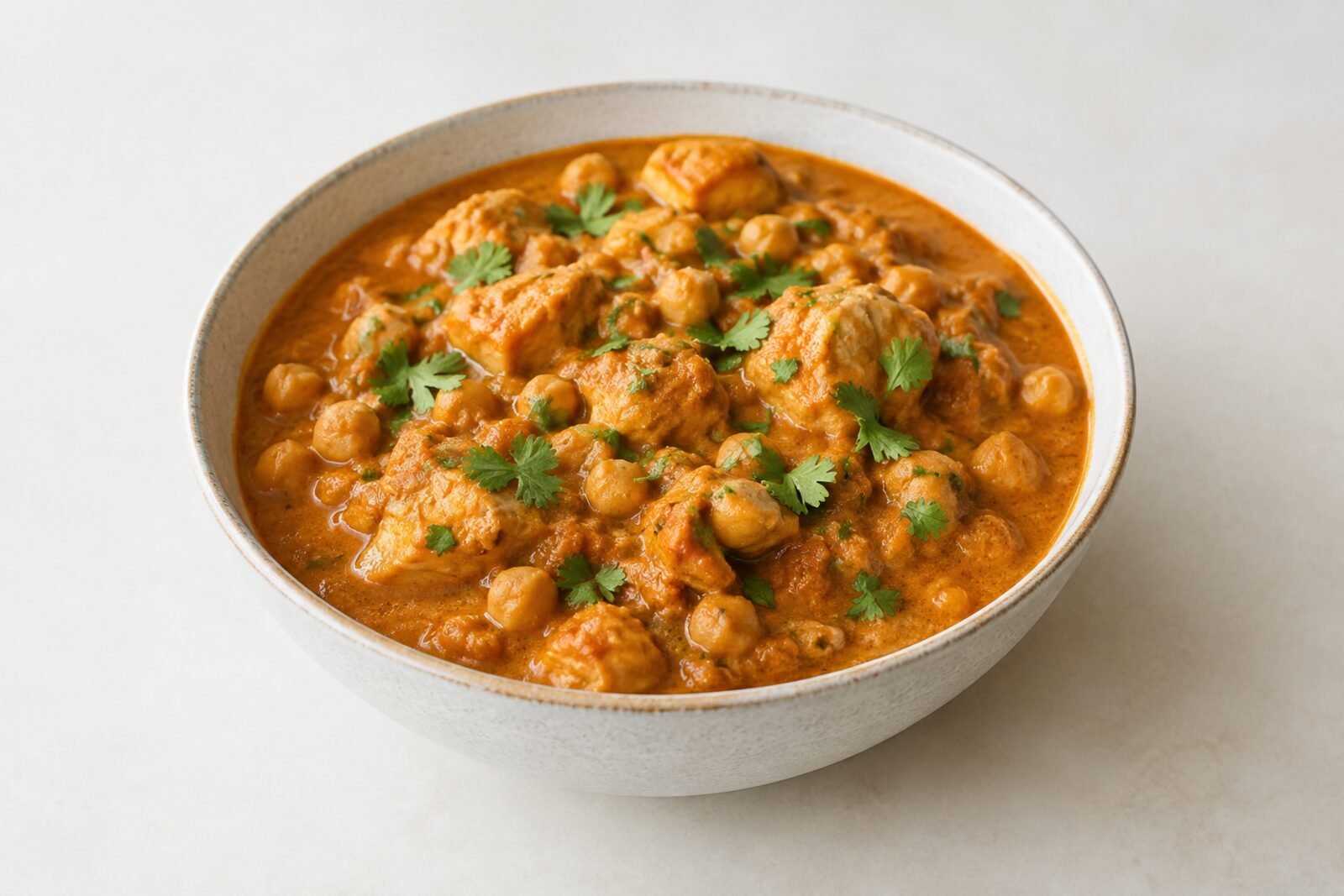
Restaurant tikka masala gets its richness from cream and butter. Here Greek yogurt does both jobs: a little of it marinates the chicken, and the rest is tempered with hot sauce at the end and stirred in off the heat, so it turns the sauce orange and smooth without splitting. A can of chickpeas cooks in the sauce alongside the chicken.
Ten minutes of prep and a 15-minute marinade, then 4 hours on low or 2 on high. Breast pieces dry out if left much longer, so this is not an all-day recipe. You need a small skillet to bloom the spices. If your garam masala has been open for a year, buy a fresh jar; it is the main flavor.
Why this one works
44 g protein per serving: 34 g from the chicken breasts, 4 g from the yogurt and 3 g from the chickpeas.
Yogurt takes the place of the cream and butter in the sauce, so the fat stays at 9 g per serving.
7 g fiber per serving, 2.5 g of it from the chickpeas, in a dish that usually has almost none.
Blooming the spices in one measured tablespoon of oil gives the flavor that a pool of ghee usually carries; the oil adds 20 kcal a serving.
Ingredient notes
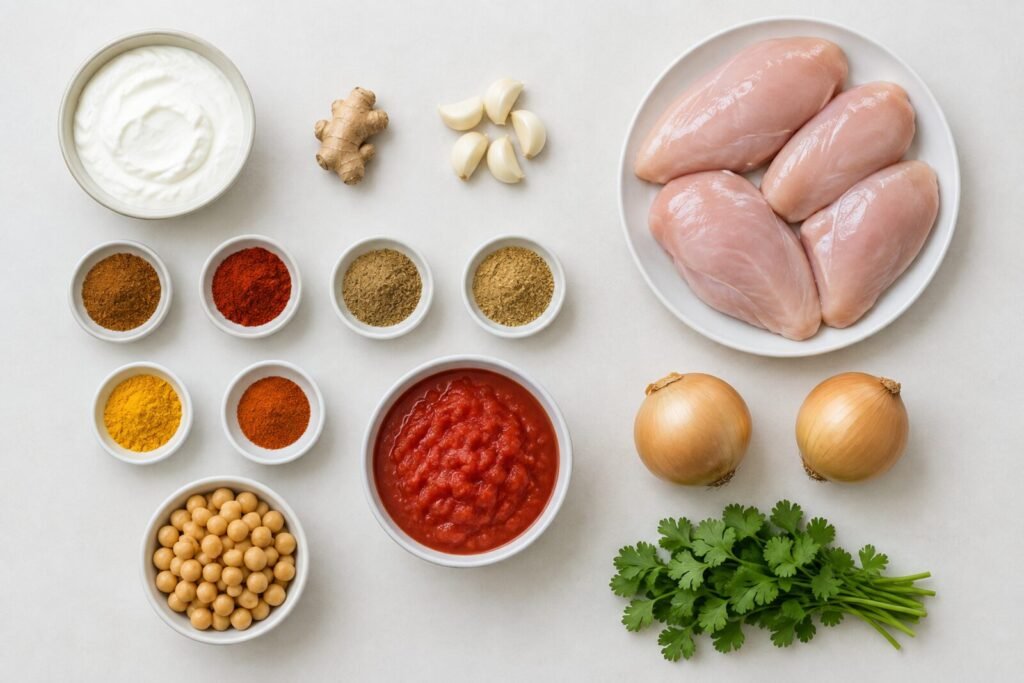
Low-fat plain Greek yogurt (1 cup / 245 g). A quarter of it marinates the chicken; the rest finishes the sauce. Tempering it with hot sauce first is what keeps it from curdling. Full-fat yogurt is more forgiving and richer. Boneless skinless chicken breasts in 1½-inch pieces (2 lb / 910 g). Pieces cook through in 4 hours and take on the sauce. Thighs hold up to longer cooking; the swaps table covers them. No-salt-added chickpeas (one 15 oz can / 240 g drained). They stay whole and pick up the spice. Rinse them. Garam masala (1 tbsp plus 1 tsp / 8 g). Most is bloomed in oil at the start; the last teaspoon goes in at the end for the fresh top notes.
115 oz can no-salt-added chickpeas (240 g drained), rinsed
1 tsp(2 g) garam masala, to finish
½ cup(8 g) cilantro, chopped
Method
Stir ¼ cup (60 g) of the yogurt with the ginger, garlic and salt. Toss the chicken in it and leave 15 minutes, or refrigerate up to 24 hours.
Heat the oil in a small skillet over medium. Add the garam masala, paprika, cumin, coriander, turmeric and cayenne and stir 45 seconds, until fragrant and a shade darker.
Add ½ cup of the crushed tomatoes to the skillet to stop the spices cooking, stir 30 seconds, then scrape it all into a 6-quart slow cooker.
Add the onions, the rest of the tomatoes and the chickpeas and stir. Nestle the chicken and its marinade into the sauce.
Cover and cook on LOW for 4 hours or HIGH for 2 hours, until the largest piece of chicken reads 165 °F (74 °C).
Turn the cooker off. Put the remaining ¾ cup (185 g) yogurt in a bowl and whisk in 1 cup of hot sauce from the pot, a ladle at a time.
Stir the tempered yogurt and the finishing garam masala into the pot. Do not let it boil again. Top with the cilantro.
Cook’s note
Blooming the ground spices in oil for under a minute before they go into the pot is what keeps the sauce from tasting dusty; a slow cooker never gets hot enough to do it.
Storage
Refrigerate 4 days or freeze 2 months; after thawing the sauce can look grainy, and a hard stir brings it back. Reheat gently on the stove, short of a boil, so the yogurt does not split.
Nutrition
Nutrition Facts
6 servings per recipeServing size 1 of 6 servings
Calories per serving365
% Daily Value*
Total Fat 9g
12%
Saturated Fat 2g
10%
Sodium 720mg
31%
Total Carbohydrate 28g
10%
Dietary Fiber 7g
25%
Total Sugars 11g
Protein 44g
88%
* The % Daily Value tells you how much a nutrient in a serving of food contributes to a daily diet. 2,000 calories a day is used for general nutrition advice.
How this panel was built
Every ingredient in this recipe is mapped to a USDA FoodData Central entry and the panel is computed from those entries for one serving as written. Optional ingredients and anything "to taste" are excluded. Values are rounded: protein to the gram, calories to the nearest 5 and sodium to the nearest 10 mg. The panel is calculated, not lab-tested; a different brand of stock or cheese will move sodium and fat. Cost per serving is an estimate at national-average store-brand prices; your store will differ.