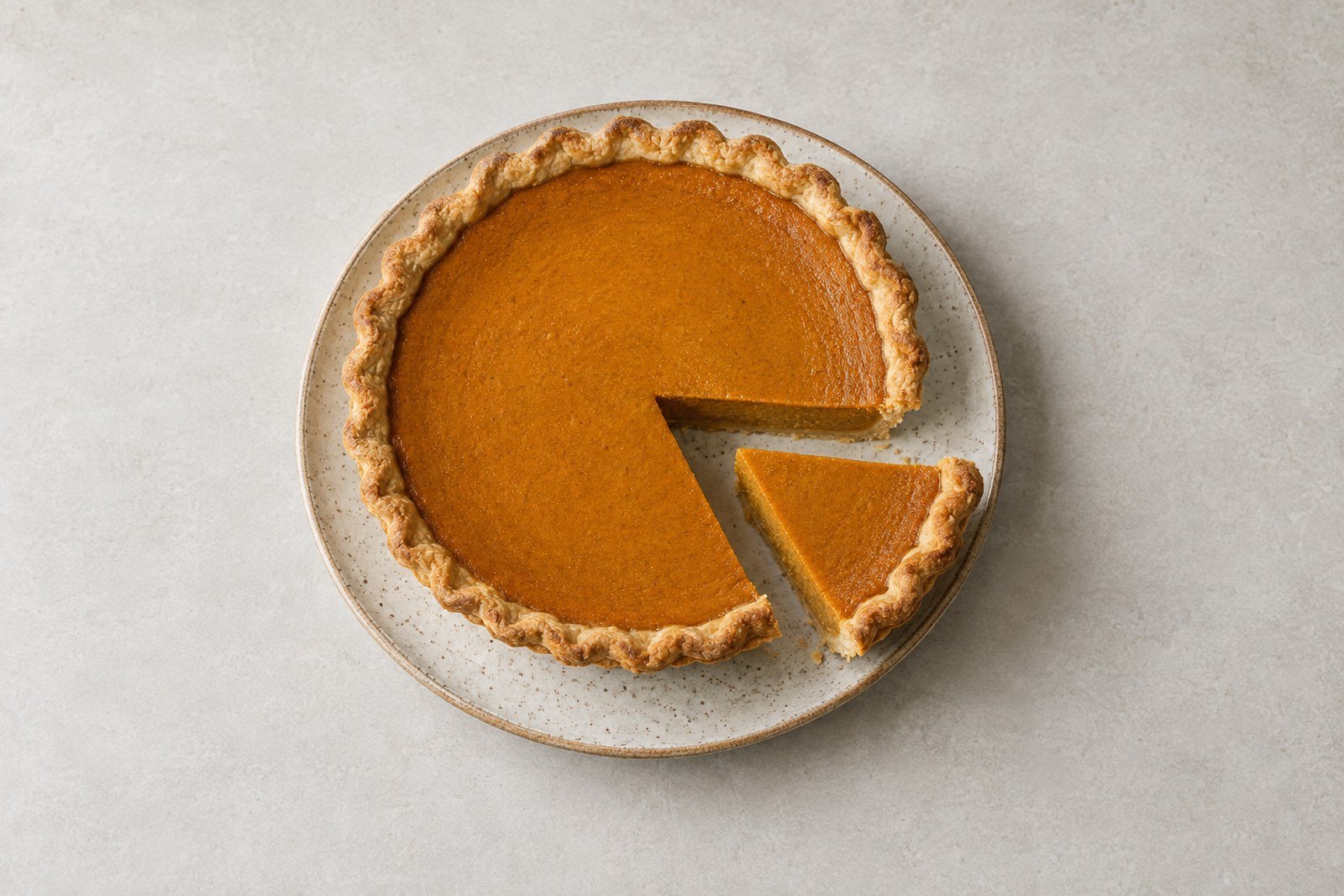
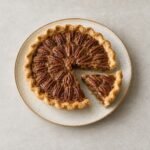
Pumpkin pie is the American Thanksgiving dessert: a spiced pumpkin custard baked in a flaky crust. Pumpkin baked in a crust appears in the first American cookbook, Amelia Simmons’s American Cookery of 1796. This is a cheat meal, made the classic way with an all-butter crust, evaporated milk and brown sugar, and the numbers are here so you know what a slice is.
It takes about 1 hour 40 minutes of work and baking, plus 1 hour to chill the dough and 2 hours to cool before slicing; the custard needs that time to set. Make it the day before Thanksgiving if you like. Canned pumpkin purée, not pumpkin pie filling, is what you want.
Why this one works
A cheat meal made the classic way, eight slices to a pie: 355 calories and 7 g protein a slice.
An all-butter crust: 11.5 g of the 16 g fat per slice is the butter.
Three-quarters of a cup of brown sugar: 20 g of the 28 g sugars per slice.
Evaporated milk and two eggs in the custard: 4.5 g of the 7 g protein per slice, at $0.70 a slice.
Ingredient notes
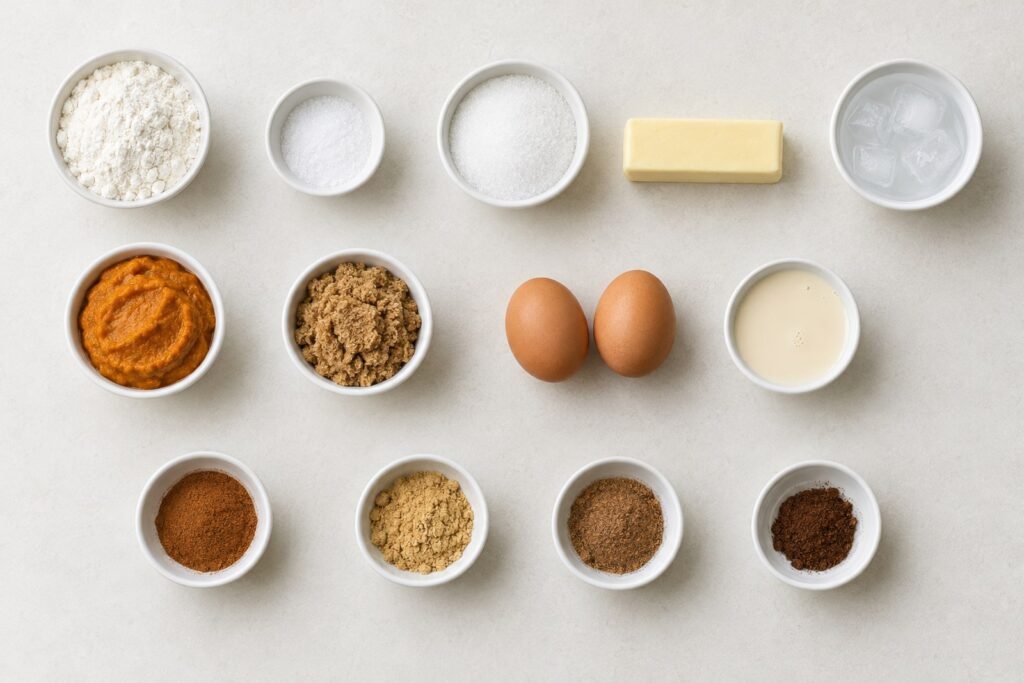
Pumpkin purée (one 15 oz can / 425 g). Plain cooked pumpkin. Canned pumpkin pie filling is already sweetened and spiced and won't work here. Evaporated milk (one 12 oz can / 354 ml). Milk cooked down to about half its water, which gives the custard its smooth, dense texture. Cold unsalted butter (½ cup / 113 g). Keep it cold and leave pea-sized pieces in the dough; they melt in the oven and make the crust flaky. Spices. Cinnamon, ginger, nutmeg and cloves; 1 tablespoon of pumpkin pie spice can replace all four.
Scales every quantity and the servings count. The panel stays per serving.
1¼ cups(156 g) all-purpose flour
¼ tsp(1.5 g) fine salt, for the crust
1 tbsp(13 g) granulated sugar
½ cup(113 g) cold unsalted butter, cubed
4 tbsp(60 ml) ice water
115 oz can (425 g) pumpkin purée
¾ cup(165 g) packed light brown sugar
2large eggs
112 oz can (354 ml) evaporated milk
1½ tsp(3 g) ground cinnamon
1 tsp(2 g) ground ginger
¼ tsp(0.5 g) ground nutmeg
⅛ tsp(0.3 g) ground cloves
½ tsp(3 g) fine salt, for the filling
Method
For the crust, whisk the flour, ¼ tsp salt and granulated sugar in a bowl. Rub in the butter with your fingertips until it is in pea-sized pieces. Sprinkle in the ice water a tablespoon at a time, tossing with a fork, until the dough holds together when pinched. Press into a disk, wrap and refrigerate 1 hour.
Roll the dough into a 12-inch round on a floured surface and fit it into a 9-inch pie plate. Fold the overhang under and crimp the edge. Refrigerate 15 minutes.
Heat the oven to 425 °F (220 °C). Line the crust with foil, fill with pie weights or dried beans and bake 15 minutes. Remove the foil and weights and bake 5 minutes more, until pale golden. Lower the oven to 350 °F (175 °C).
Whisk the pumpkin, brown sugar, eggs, evaporated milk, spices and ½ tsp salt until smooth. Pour into the warm crust.
Bake 50 to 55 minutes, until the edge is set and the center jiggles only slightly when you nudge the plate (175 °F / 79 °C in the center).
Cool on a rack for 2 hours, then refrigerate; don't leave it out longer than 2 hours.
Cook’s note
Take the pie out while the center still jiggles a little. It keeps setting as it cools; baked until firm all the way across, the custard cracks and turns grainy.
Storage
Refrigerate within 2 hours of baking, covered, up to 4 days. Serve cold or at room temperature. It freezes up to 1 month, though the crust softens.
Nutrition
Nutrition Facts
8 servings per recipeServing size 1 of 8 servings
Calories per serving355
% Daily Value*
Total Fat 16g
21%
Saturated Fat 10g
50%
Sodium 290mg
13%
Total Carbohydrate 46g
17%
Dietary Fiber 2.5g
9%
Total Sugars 28g
Protein 7g
14%
* The % Daily Value tells you how much a nutrient in a serving of food contributes to a daily diet. 2,000 calories a day is used for general nutrition advice.
How this panel was built
Every ingredient in this recipe is mapped to a USDA FoodData Central entry and the panel is computed from those entries for one serving as written. Optional ingredients and anything "to taste" are excluded. Values are rounded: protein to the gram, calories to the nearest 5 and sodium to the nearest 10 mg. The panel is calculated, not lab-tested; a different brand of stock or cheese will move sodium and fat. Cost per serving is an estimate at national-average store-brand prices; your store will differ.