Chickpea pasta and peas in a basil pesto loosened with Greek yogurt: 30 g protein and 11 g fiber a bowl.
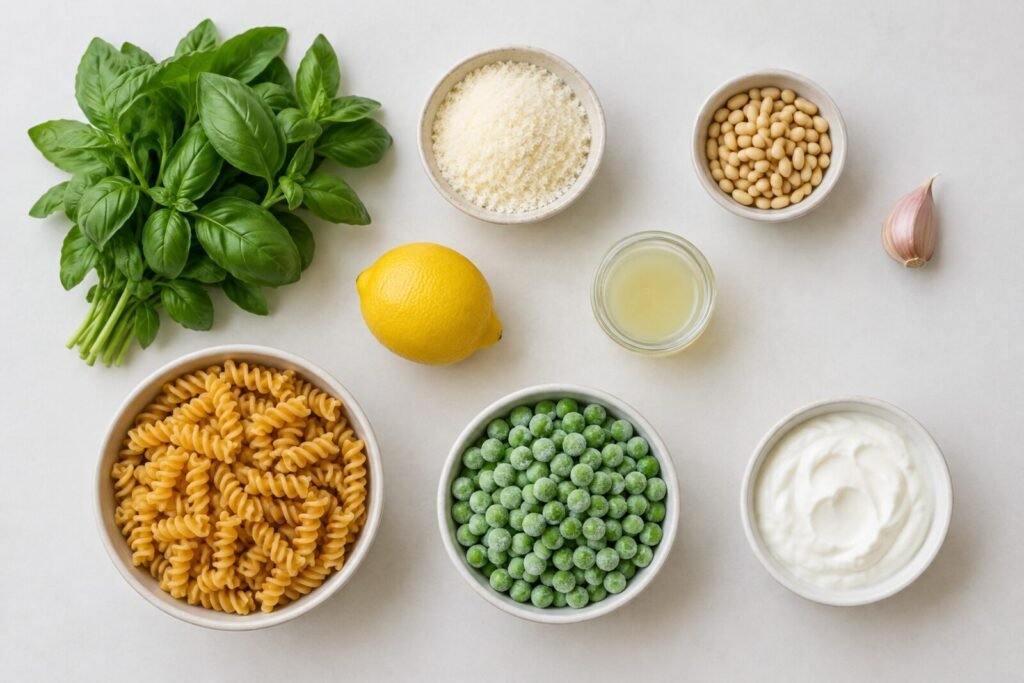
Chickpea pasta tossed with frozen peas and a basil pesto loosened with Greek yogurt and starchy cooking water, so the sauce coats every piece without the quarter cup of oil most pestos call for. The pasta brings 20 g of the protein on its own. The peas cook in the same pot for the last two minutes, and the pesto goes in off the heat so the basil stays green.
Twenty-five minutes, one large pot, a colander and a blender or food processor for the pesto. Chickpea pasta foams heavily and softens fast: use plenty of water, stir in the first minute, start tasting 2 minutes before the package time and never rinse it. Brands differ in protein, so the label on your box decides the final panel.
Ingredient notes
Chickpea pasta (12 oz dry / 340 g). Usually sold in 8 oz boxes, so buy two. Brands differ in protein and texture; we computed Banza, about 13 g protein per 2 oz dry. Rotini holds the pesto best. Fresh basil (2 packed cups / 45 g). About two supermarket clamshells. It is the largest cost here, $1.41 of each serving. Half basil, half baby spinach keeps the color longer and costs $0.60 less per serving. Pine nuts (2 tbsp / 17 g). Toasted in a dry pan for 2 to 3 minutes, shaken often. Walnuts cost $0.22 less per serving and are in the swaps. 2 percent Greek yogurt (⅔ cup / 150 g). Makes the pesto creamy without cream or more oil. Nonfat works but tastes sharper. Parmesan. Most Parmesan is made with animal rennet, so it isn't vegetarian. Look for a Parmesan-style cheese labeled vegetarian (made with microbial rennet).