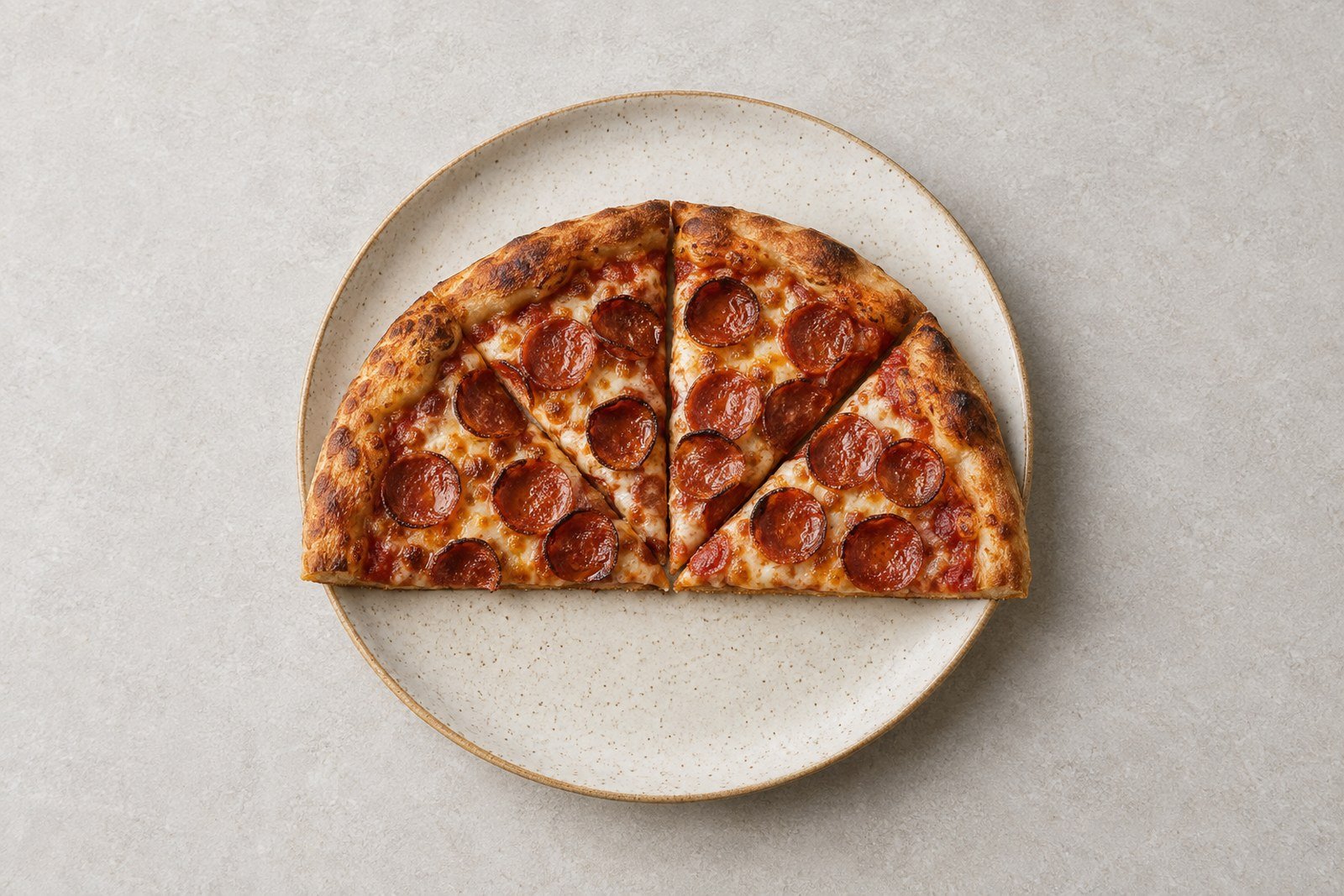
Two 12-inch pizzas from a same-day dough, a no-cook sauce of crushed tomatoes, garlic and oregano, shredded low-moisture mozzarella, a little Parmesan and a full layer of pepperoni that cups and crisps in a very hot oven. We bake on a preheated pizza steel or stone at the oven’s top temperature, because that heat from below is what gives a home oven a browned, crisp bottom instead of a pale, bready one.
Half a pizza, four slices, is one serving; the recipe makes two pizzas for four people. Start the dough about 3 hours before dinner: 10 minutes of kneading, a 2-hour rise, then 30 minutes as dough balls while the steel heats. A pizza steel, stone or an upturned heavy sheet pan, plus a peel or a rimless sheet, does the job. Buy pepperoni that is sliced thin, in a stick or package, not the thick deli kind.
Why this one works
Four slices make a serving: the mozzarella and Parmesan supply 23 g of the 40 g protein, the crust 12 g and the pepperoni 4 g.
The dough uses a single tablespoon of olive oil for two pizzas, enough for tenderness and browning; it adds about 30 kcal per serving.
The sauce gets ¼ tsp salt, 150 mg sodium in each serving, since the cheese and pepperoni bring 980 mg and the dough salt 870 mg: 2,010 mg sodium per serving.
Each pizza bakes in 8 to 10 minutes once the steel has heated for 45 minutes, and a serving costs $1.82.
Ingredient notes
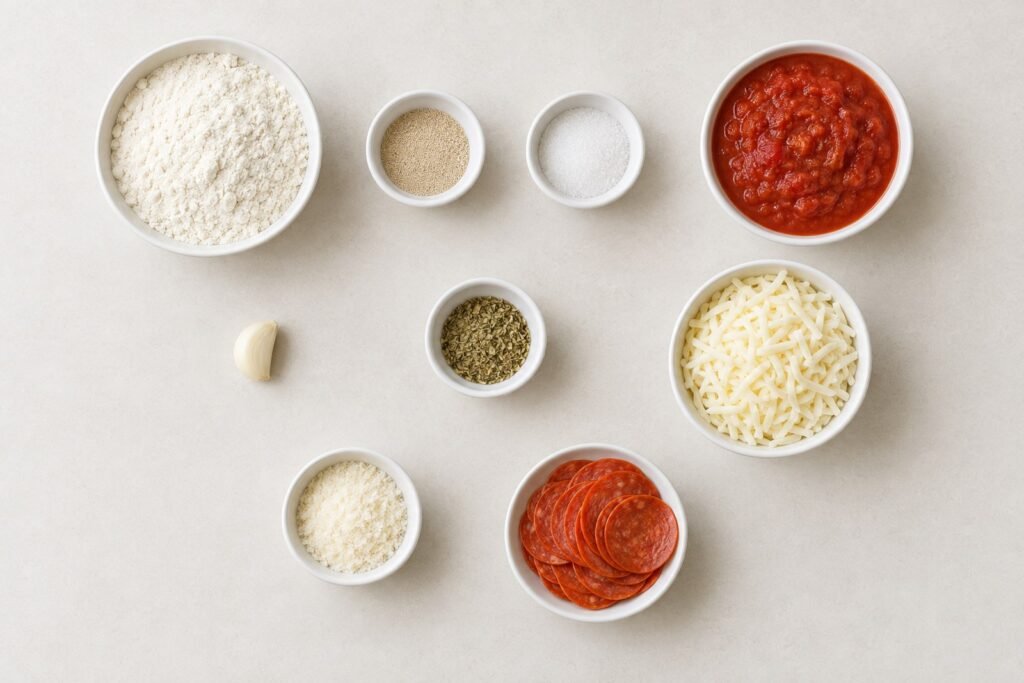
All-purpose flour (3½ cups / 450 g). Gives a crisp, slightly tender crust and is what most kitchens already have. Bread flour makes a chewier crust with the same method and water. Instant yeast (1 tsp / 3 g). Also sold as rapid-rise or bread-machine yeast; it mixes straight into the flour. Active dry yeast works at the same weight if you first dissolve it in the warm water for 5 minutes. Low-moisture mozzarella (12 oz / 340 g). The firm, shrink-wrapped block, not fresh mozzarella in water, which floods a home-oven pizza. Shred it yourself; bagged shreds are dusted with starch and melt less smoothly. It brings 20 g protein per serving. Pepperoni (3 oz / 85 g). Thin-sliced, about 1½ inches across. The small, thick-cut kind curls into cups with crisp edges; either works. No-salt-added crushed tomatoes (1 cup / 245 g). The sauce is not cooked, so buy a brand that tastes good straight from the can.
Whisk the flour, yeast, sugar and 1½ tsp salt in a large bowl. Add the water and oil and stir until no dry flour remains.
Knead on a clean counter 8 to 10 minutes, until smooth and springy. The dough will feel tacky but should not stick to your hands.
Set in a lightly oiled bowl, cover, and let rise at room temperature about 2 hours, until doubled.
Divide into two balls, tuck the edges underneath to tighten them, and set on a floured counter under a towel for 30 minutes.
Meanwhile, set a pizza steel or stone on the upper-middle rack and heat the oven to 500 °F (260 °C) for at least 45 minutes.
Stir the crushed tomatoes, garlic, oregano and ¼ tsp salt together.
Press one ball into a 12-inch round on a floured peel, leaving a thicker 1-inch rim. Spread half the sauce over it, keeping the rim bare.
Scatter half the mozzarella and Parmesan over the sauce, then lay on half the pepperoni.
Slide the pizza onto the steel and bake 8 to 10 minutes, until the crust is deep brown underneath and the cheese bubbles and spots.
Rest on a rack 2 minutes, then cut into 8 slices. Repeat with the second ball while you eat the first.
Cook’s note
The 45-minute preheat is the step people skip: the oven air reaches temperature in 15 minutes, but the steel takes much longer, and the crust bottom bakes from the steel, not the air.
Storage
Leftover slices keep 3 days in the fridge; reheat in a covered skillet over medium, 4 to 5 minutes, to crisp the bottom. Wrapped dough balls keep 3 days in the fridge (the flavor improves) or 3 months frozen; thaw overnight in the fridge and rest 1 hour at room temperature before shaping.
Nutrition
Nutrition Facts
4 servings per recipeServing size half pizza, 4 slices
Calories per serving850
% Daily Value*
Total Fat 33g
42%
Saturated Fat 15g
75%
Sodium 2,010mg
87%
Total Carbohydrate 97g
35%
Dietary Fiber 4.5g
16%
Total Sugars 6g
Protein 40g
80%
* The % Daily Value tells you how much a nutrient in a serving of food contributes to a daily diet. 2,000 calories a day is used for general nutrition advice.
How this panel was built
Every ingredient in this recipe is mapped to a USDA FoodData Central entry and the panel is computed from those entries for one serving as written. Optional ingredients and anything "to taste" are excluded. Values are rounded: protein to the gram, calories to the nearest 5 and sodium to the nearest 10 mg. The panel is calculated, not lab-tested; a different brand of stock or cheese will move sodium and fat. Cost per serving is an estimate at national-average store-brand prices; your store will differ.