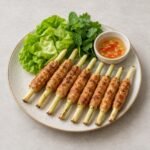
Spicy Tuna Rice Cakes

Spicy tuna mashed with Greek yogurt and sriracha on brown rice cakes, two a person: 21 g protein and 190 calories.

Protein / serving21g
Calories190
Total time10min
Serves4
Fiber2g
Cost (est.)$1.72/srv
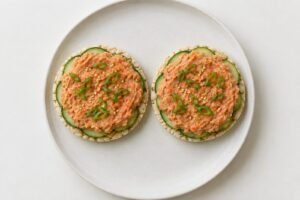
Brown rice cakes topped with cucumber, spicy tuna, scallions and sesame seeds

The spicy tuna from a sushi roll, made with canned tuna, Greek yogurt, sriracha and a few drops of toasted sesame oil, piled onto plain brown rice cakes with cucumber, scallion and sesame seeds. The rice cake gives the crunch that crispy-rice spicy tuna gets from frying. Two loaded rice cakes make a serving, and most of what is on them is tuna.

10 minutes and a bowl. Chunk light tuna in water mashes into a softer, more sushi-like texture than solid albacore. Assemble just before eating; rice cakes start to soften under the topping within about 15 minutes. The tuna mix can be made up to 2 days ahead and kept cold.

Why this one works
  • 16 g of the 21 g protein per serving comes from the tuna, so the rice cakes can stay plain.
  • Greek yogurt stands in for the mayonnaise in sushi-bar spicy tuna; 2 tbsp of mayonnaise instead would add 4.5 g fat per serving.
  • A teaspoon of toasted sesame oil carries more flavor than a larger amount of neutral oil would, and adds 10 kcal per serving.
  • Rice cakes replace the fried rice of crispy-rice spicy tuna, so the crunch comes without frying; the pair adds 70 kcal per serving.

Ingredient notes

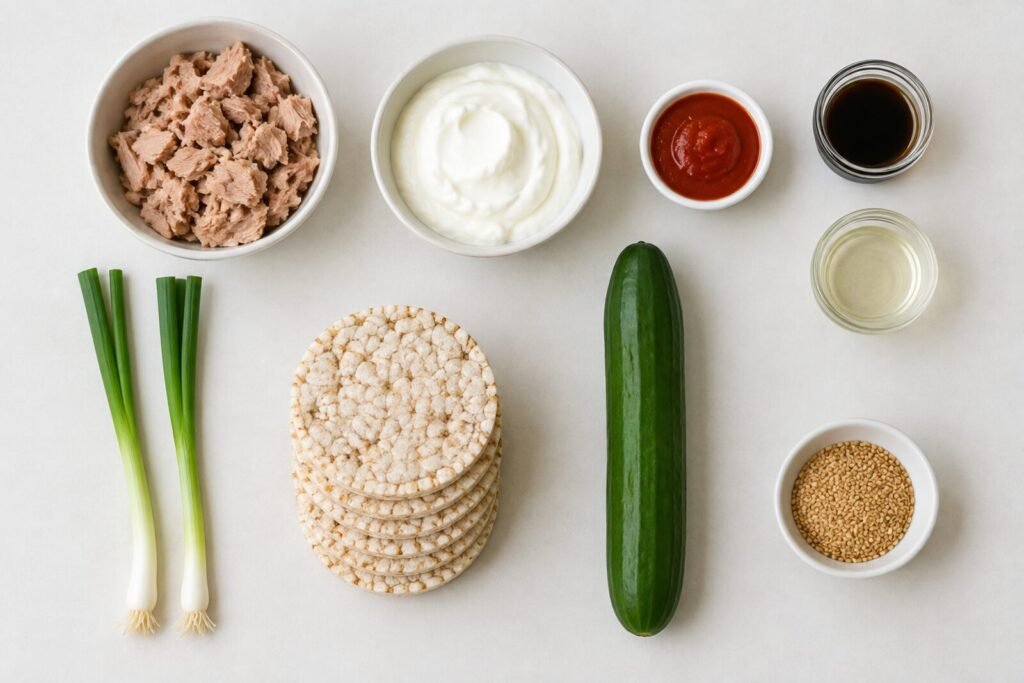
Ingredients for Spicy Tuna Rice Cakes: chunk light tuna, plain 2% Greek yogurt, sriracha, soy sauce, rice vinegar, two scallions, eight brown rice cakes, English cucumber, sesame seeds

Chunk light tuna in water (three 5 oz cans / 339 g drained). Drained hard. It mashes finer than albacore, which is the texture you want here. Plain brown rice cakes (8 / 72 g). Lightly salted or unsalted, not flavored; flavored ones carry sugar and more salt. Sriracha (1 tbsp / 17 g). Adjust to taste. Gochujang works and is sweeter and thicker. Toasted sesame oil (1 tsp / 4.5 g). The dark, toasted kind, used for flavor, not for cooking.

Recipe card

Spicy Tuna Rice Cakes

Prep10min
Cook0min
Total10min
Serves4
Protein21g

Ingredients

Scales every quantity and the servings count. The panel stays per serving.

  • 35 oz cans chunk light tuna in water (339 g drained)
  • ½ cup(115 g) plain 2% Greek yogurt
  • 1 tbsp(17 g) sriracha
  • 1 tsp(5 ml) low-sodium soy sauce
  • 1 tsp(4.5 g) toasted sesame oil
  • 1 tsp(5 ml) rice vinegar
  • 2scallions (30 g), thinly sliced, divided
  • 8plain lightly salted brown rice cakes (72 g)
  • ½English cucumber (100 g), thinly sliced
  • 1 tsp(3 g) toasted sesame seeds
  • Nori strips, optional

Method

  1. Drain the tuna well, pressing out the water with the can lid.

  2. In a bowl, stir the yogurt, sriracha, soy sauce, sesame oil and vinegar until smooth and evenly orange.

  3. Add the tuna and most of the scallions. Mash with a fork until the tuna is finely flaked and the mixture holds together.

  4. Lay 2 or 3 cucumber slices on each rice cake.

  5. Divide the tuna among the rice cakes, about ⅓ cup each, and spread it to the edges.

  6. Scatter the remaining scallions, the sesame seeds and nori, if using, over the top. Eat right away, 2 per person.

Cook’s note
Mashing the tuna finely instead of leaving it in chunks gives it the soft, sushi-counter texture, and it stays on the rice cake instead of rolling off.

Storage

The spicy tuna keeps 2 days refrigerated. Assemble the rice cakes just before eating. Does not freeze.

Nutrition

Nutrition Facts
4 servings per recipeServing size 1 of 4 servings
Calories
per serving
190
% Daily Value*
Total Fat 3.5g4%
Saturated Fat 1g5%
Sodium 400mg17%
Total Carbohydrate 19g7%
Dietary Fiber 2g7%
Total Sugars 2.5g
Protein 21g42%

* The % Daily Value tells you how much a nutrient in a serving of food contributes to a daily diet. 2,000 calories a day is used for general nutrition advice.

How this panel was built

Every ingredient in this recipe is mapped to a USDA FoodData Central entry and the panel is computed from those entries for one serving as written. Optional ingredients and anything "to taste" are excluded. Values are rounded: protein to the gram, calories to the nearest 5 and sodium to the nearest 10 mg. The panel is calculated, not lab-tested; a different brand of stock or cheese will move sodium and fat. Cost per serving is an estimate at national-average store-brand prices; your store will differ.

How we count everything →

Protein per 100 kcal11.1 gSite median 8.0 g
Cost per 10 g protein$0.82Site median $0.82
Calories from protein44%4 kcal per gram
Made it? Rate this recipe
Course SnacksMethod No cookProtein source SeafoodCuisine Asian

Swaps and what they change

SwapPer serving
Leave out the soy sauce and add 1 tsp (5 ml) more rice vinegar−50 mg sodium
Low-sodium (no-salt-added) chunk light tuna for regular (same 3 cans)−170 mg sodium · +$0.15
Gochujang for the sriracha (same 17 g)+5 kcal · +10 mg sodium · +$0.02
2 tbsp (28 g) mayonnaise for the Greek yogurt+25 kcal · −3 g protein · +4.5 g fat · +30 mg sodium · −$0.09
One more 5 oz can tuna (113 g drained), with 2 tbsp (30 g) more yogurt+30 kcal · +6 g protein · +70 mg sodium · +$0.33
Protein ladder

As written it is 21 g. Here is how to get to 50.

+5 g→ 26 g¼ cup (40 g) shelled edamame on the side, per serving+45 kcal · +$0.33
+6 g→ 27 gOne more 5 oz can tuna (113 g drained) in the mix+25 kcal · +$0.30
+7 g→ 28 g1 large soft-boiled egg (50 g), per serving+70 kcal · +$0.19
+9 g→ 30 g3 oz (85 g) extra-firm tofu, sliced, per serving+70 kcal · +$0.53

It clears 20 g as written; each rung adds to that.

Same constraint: Under $3 a serving
Uses what you already bought