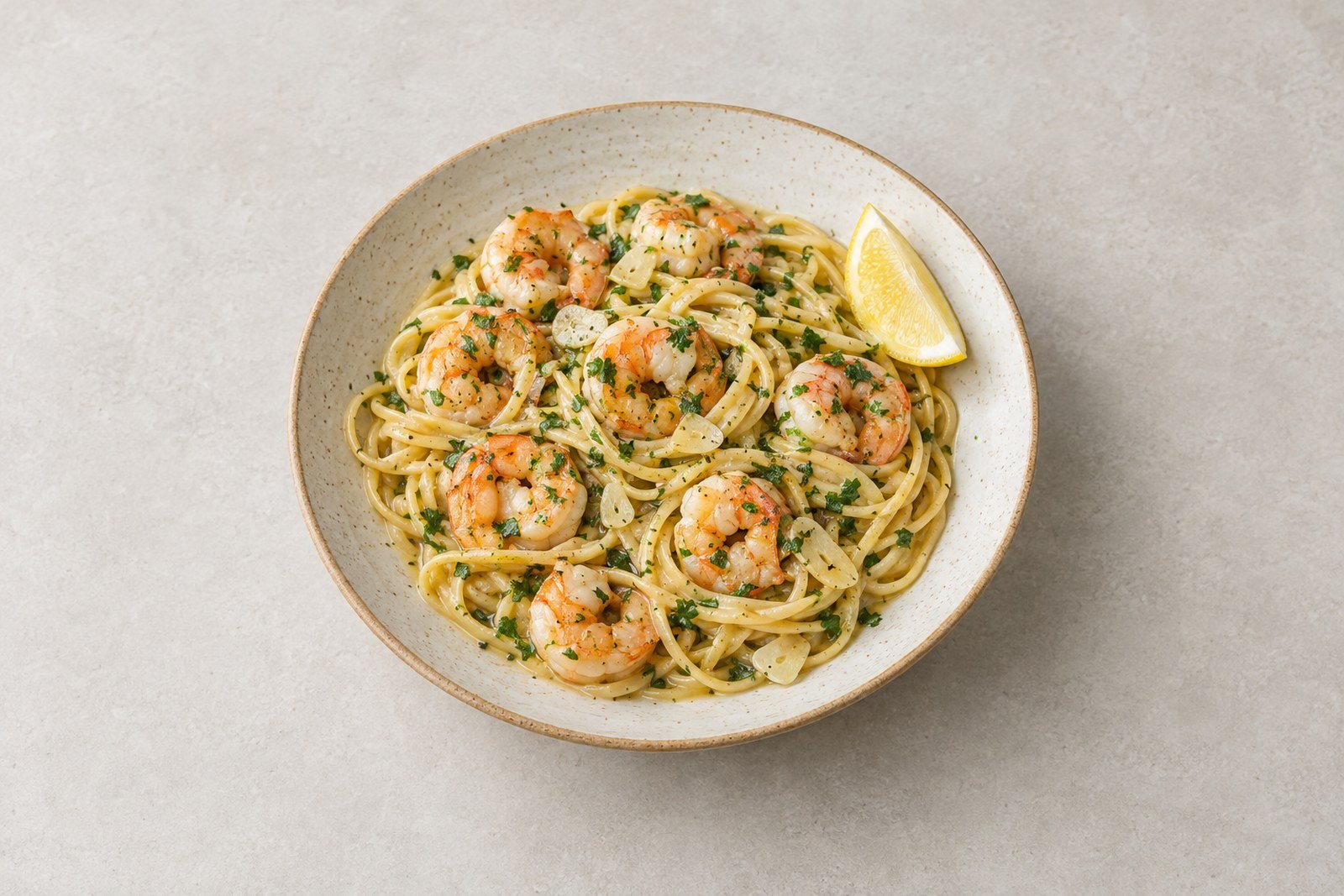
Shrimp scampi, as Italian-American restaurants make it, is shrimp sautéed in garlic, butter, white wine and lemon and tossed with linguine. Ours keeps all of that and uses a pound and a half of shrimp for four plates, with 8 ounces of pasta, so every forkful has shrimp in it. Two tablespoons of butter and one of olive oil make the sauce; starchy pasta water makes it glossy.
It all comes together in the time the pasta takes to boil. Cook the shrimp first and take them out of the pan, so they do not overcook while the sauce reduces, then toss everything together at the end.
Why this one works
A pound and a half of shrimp for four plates: 34 g of the 42 g protein per plate.
Two tablespoons of butter and one of olive oil for the whole pan: 9 g of the 11 g fat per plate, with pasta water making the sauce glossy.
Pasta cooked in unsalted water and half a teaspoon of salt: 290 mg of the 500 mg sodium per plate, and the shrimp bring most of the rest.
Eight ounces of linguine for four plates: 210 of the 475 calories per plate, at $3.90 a plate.
Ingredient notes
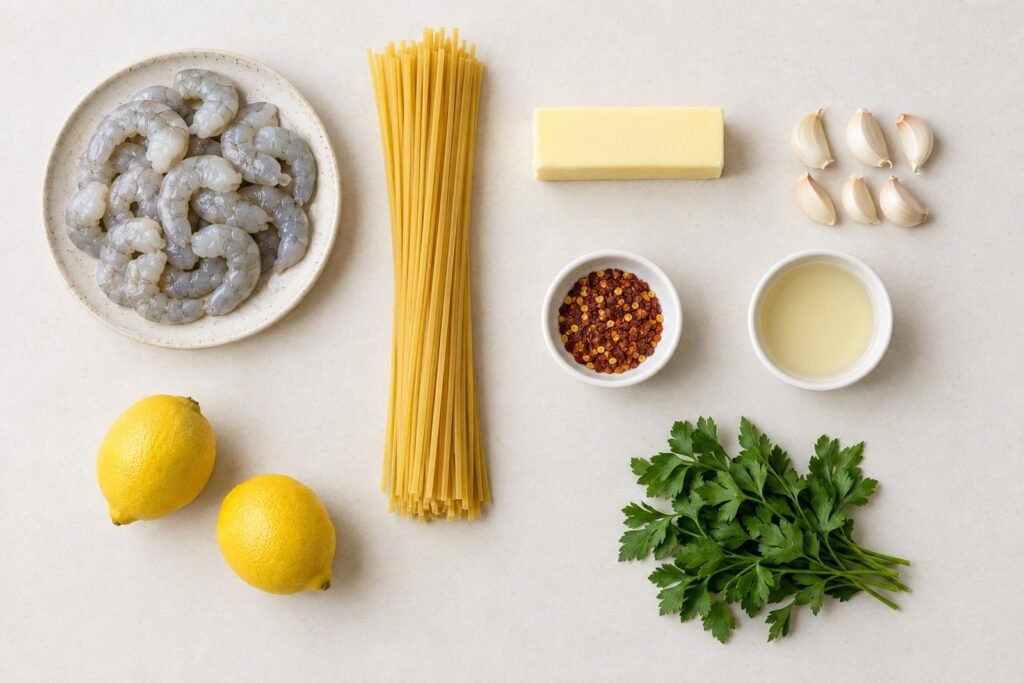
Large shrimp (1½ lb / 680 g, 31/40 count). Peeled and deveined. Frozen shrimp are fine; thaw them overnight in the fridge and pat them very dry so they sear instead of steaming. Dry white wine (½ cup / 120 ml). Pinot grigio or sauvignon blanc. For no wine, use ½ cup low-sodium vegetable stock with an extra tablespoon of lemon juice. Linguine (8 oz / 227 g). Cook it in unsalted water; salting the water adds sodium the panel cannot measure. Keep a cup of the cooking water before you drain it. Garlic (6 cloves / 18 g). Sliced thin, not minced, so it softens in the butter without burning.
Scales every quantity and the servings count. The panel stays per serving.
8 oz(227 g) linguine
1½ lb(680 g) large shrimp (31/40 count), peeled and deveined
½ tsp(3 g) fine salt, divided
½ tsp(1.2 g) black pepper
1 tbsp(14 g) olive oil
2 tbsp(28 g) unsalted butter, divided
6garlic cloves (18 g), thinly sliced
½ tsp(1 g) red pepper flakes
½ cup(120 ml) dry white wine
3 tbsp(45 ml) lemon juice
1 tsp(2 g) lemon zest
½ cup(30 g) chopped flat-leaf parsley
Lemon wedges, for serving
Method
Bring a large pot of unsalted water to a boil and cook the linguine according to the package, about 10 minutes, until al dente. Keep 1 cup of the cooking water, then drain.
Meanwhile, pat the shrimp dry and season with ¼ tsp of the salt and the pepper. Heat the oil and 1 tbsp of the butter in a 12-inch skillet over medium-high.
Add half the shrimp in one layer and cook 1 to 2 minutes a side, until pink and just cooked through. Move to a plate and repeat with the rest.
Lower the heat to medium. Add the remaining 1 tbsp butter, the garlic and pepper flakes and cook 1 minute, until the garlic is fragrant and just golden.
Pour in the wine and simmer 2 minutes, until reduced by about half. Stir in the lemon juice, zest and remaining ¼ tsp salt.
Add the linguine and ½ cup of the pasta water and toss 1 to 2 minutes, until the sauce turns glossy and coats the pasta; add more water if it looks dry. Return the shrimp and their juices with the parsley, toss and serve with lemon wedges.
Cook’s note
Take the shrimp out of the pan as soon as they turn pink. They warm through again when you toss them back in, and shrimp left in the pan while the sauce reduces turn rubbery.
Storage
Refrigerate up to 3 days and reheat gently in a skillet with a splash of water. It does not freeze well.
Nutrition
Nutrition Facts
4 servings per recipeServing size 1 of 4 servings
Calories per serving475
% Daily Value*
Total Fat 11g
14%
Saturated Fat 4.5g
23%
Sodium 500mg
22%
Total Carbohydrate 46g
17%
Dietary Fiber 2.5g
9%
Total Sugars 2.5g
Protein 42g
84%
* The % Daily Value tells you how much a nutrient in a serving of food contributes to a daily diet. 2,000 calories a day is used for general nutrition advice.
How this panel was built
Every ingredient in this recipe is mapped to a USDA FoodData Central entry and the panel is computed from those entries for one serving as written. Optional ingredients and anything "to taste" are excluded. Values are rounded: protein to the gram, calories to the nearest 5 and sodium to the nearest 10 mg. The panel is calculated, not lab-tested; a different brand of stock or cheese will move sodium and fat. Cost per serving is an estimate at national-average store-brand prices; your store will differ.