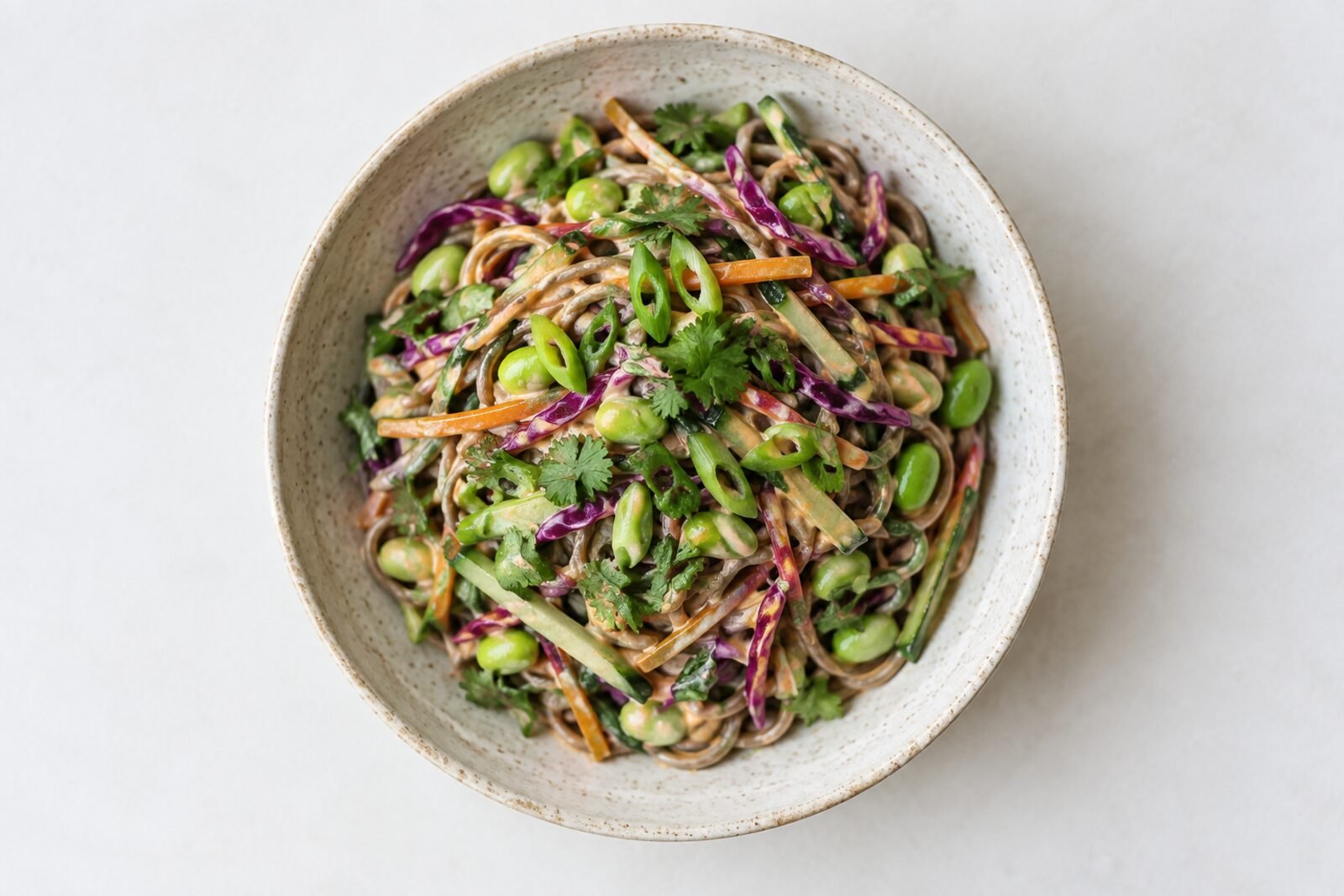
Cold soba noodles and edamame tossed with carrot, cucumber and red cabbage in a peanut dressing sharpened with lime, rice vinegar and fresh ginger. The edamame and the noodles share one pot of boiling water, one after the other, and a hard rinse under cold running water afterward is the step that keeps soba from turning gluey as it sits in the dressing.
Twenty-five minutes, one large pot, a colander and a big bowl. Check the soba label: most packs are part wheat, and soba made only from buckwheat is the gluten-free version but breaks more readily. Use natural peanut butter with only peanuts and salt in it; sweetened kinds make the dressing cloying. It packs well for lunch, dressed, for up to two days.
Why this one works
The edamame cooks in the noodle water and carries 11 g of the protein per bowl, the largest share.
The dressing uses 3 tbsp of peanut butter for four bowls, thinned with lime and water rather than oil; the peanut butter adds 70 kcal per bowl.
Buckwheat soba brings 8 g of the protein per bowl, 1 g more than plain wheat spaghetti of the same weight.
Low-sodium soy sauce is the only salt added to the dressing: 290 mg of the 820 mg sodium per bowl, with 450 mg in the dry soba itself.
Ingredient notes
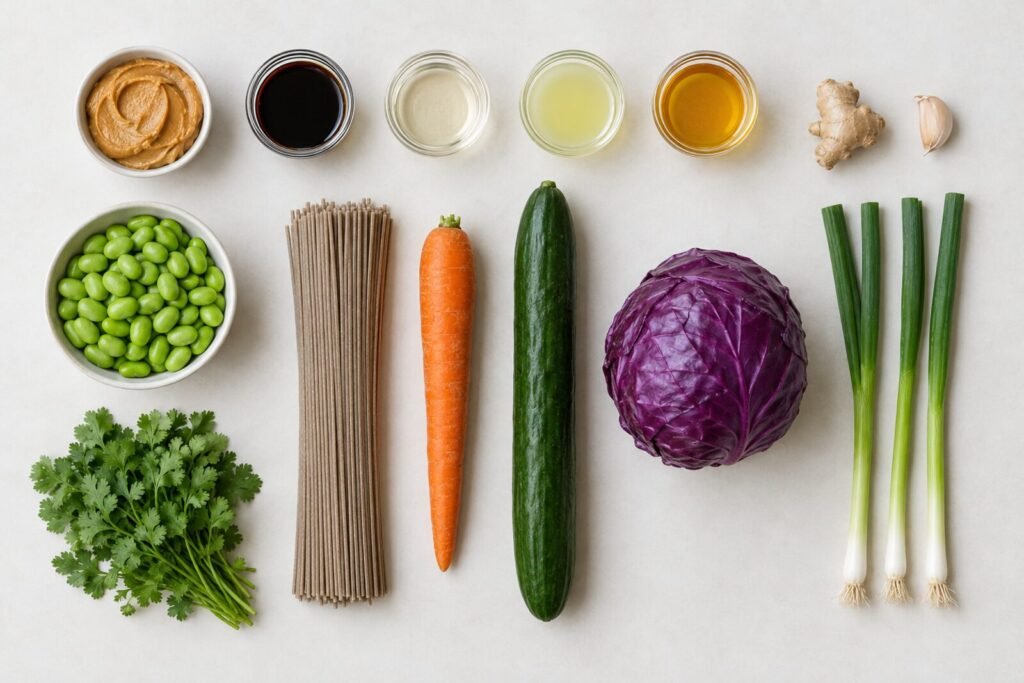
Soba noodles (8 oz dry / 227 g). Japanese buckwheat noodles, usually mixed with wheat. Cook them only to just tender; they keep softening as they sit. Frozen shelled edamame (2½ cups / 375 g). Cooked in the pot first, then lifted out before the noodles go in. Natural peanut butter (3 tbsp / 48 g). Peanuts and salt only. Stir the jar well first; the oil on top belongs in the dressing. Low-sodium soy sauce (2 tbsp / 30 ml). The dressing's only salt. Low-sodium tamari is the gluten-free swap.
Recipe card
Soba Noodle Salad with Edamame and Peanut Dressing
Scales every quantity and the servings count. The panel stays per serving.
3 tbsp(48 g) natural peanut butter
2 tbsp(30 ml) low-sodium soy sauce
2 tbsp(30 ml) rice vinegar
2 tbsp(30 ml) lime juice
1 tsp(7 g) honey
1 tbsp(6 g) fresh ginger, grated
1garlic clove (3 g), grated
1 tsp(4.5 g) toasted sesame oil
3 tbsp(45 ml) warm water
2½ cups(375 g) frozen shelled edamame
8 oz(227 g) dry soba noodles
1medium carrot (60 g), cut into matchsticks
½English cucumber (150 g), cut into matchsticks
2 cups(140 g) red cabbage, thinly sliced
3scallions (45 g), thinly sliced
¼ cup(4 g) cilantro, chopped
Chopped dry-roasted peanuts and chili crisp, optional
Method
Whisk the peanut butter, soy sauce, vinegar, lime juice, honey, ginger, garlic and sesame oil in a large bowl. Add the warm water a spoonful at a time until it pours like heavy cream.
Bring a large pot of water to a boil. Add the edamame and cook 3 minutes. Lift them out with a slotted spoon into a colander.
Add the soba to the same water and stir. Cook as the package directs, usually 4 to 5 minutes, until just tender.
Drain the soba into the colander with the edamame. Rinse under cold running water, rubbing the noodles between your hands, until they no longer feel slick.
Shake off as much water as you can; water left on the noodles thins the dressing.
Add the noodles, edamame, carrot, cucumber, cabbage and scallions to the dressing and toss with tongs until coated.
Top with the cilantro, and the peanuts and chili crisp if using.
Cook’s note
Rubbing the soba under cold water washes off its surface starch, which is what lets the noodles stay separate in the dressing for a day instead of setting into a block.
Storage
Refrigerate up to 2 days, dressed. The noodles soak up the dressing as they sit, so loosen with a squeeze of lime before eating. Does not freeze.
Nutrition
Nutrition Facts
4 servings per recipeServing size 1 of 4 servings
Calories per serving415
% Daily Value*
Total Fat 12g
15%
Saturated Fat 2g
10%
Sodium 820mg
36%
Total Carbohydrate 61g
22%
Dietary Fiber 9g
32%
Total Sugars 10g
Protein 23g
46%
* The % Daily Value tells you how much a nutrient in a serving of food contributes to a daily diet. 2,000 calories a day is used for general nutrition advice.
How this panel was built
Every ingredient in this recipe is mapped to a USDA FoodData Central entry and the panel is computed from those entries for one serving as written. Optional ingredients and anything "to taste" are excluded. Values are rounded: protein to the gram, calories to the nearest 5 and sodium to the nearest 10 mg. The panel is calculated, not lab-tested; a different brand of stock or cheese will move sodium and fat. Cost per serving is an estimate at national-average store-brand prices; your store will differ.