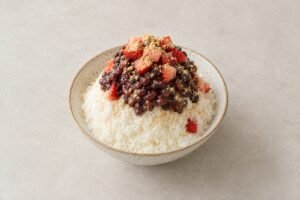
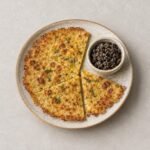
Patbingsu is the Korean shaved-ice dessert: a mound of snowy milk ice under sweet red beans, eaten fast before it melts. Most versions freeze milk and pour condensed milk over the top. Ours freezes unsweetened soy milk with a little sugar instead, so the bowl has no dairy at all and the soy milk carries some of the protein. Adzuki beans simmered with sugar until jammy, a few strawberries and a dusting of roasted soybean powder finish it.
The beans take 90 minutes of mostly hands-off simmering in one saucepan while the soy milk freezes in an 8-inch square metal pan; there is no need for an ice shaver, because a fork scrapes the frozen slab into flakes. Dried adzuki beans and roasted soybean powder (kinako or konggaru) are sold at Korean and Japanese markets and many larger grocers. Both the beans and the ice keep, so make them ahead and assemble the bowls in two minutes.
Why this one works
The soy milk ice, adzuki beans and roasted soybean powder share the protein: 5 g, 5 g and 2 g of the 13 g per bowl.
Half a cup of dried adzuki beans gives the bowl 3 g of its 5 g fiber.
The sugar is measured, 2 tbsp in the ice and ⅓ cup in the beans: 25 g sugars per bowl, most of it that added sugar.
$1.02 a bowl, and both the beans and the ice keep, so assembly takes 2 minutes.
Ingredient notes
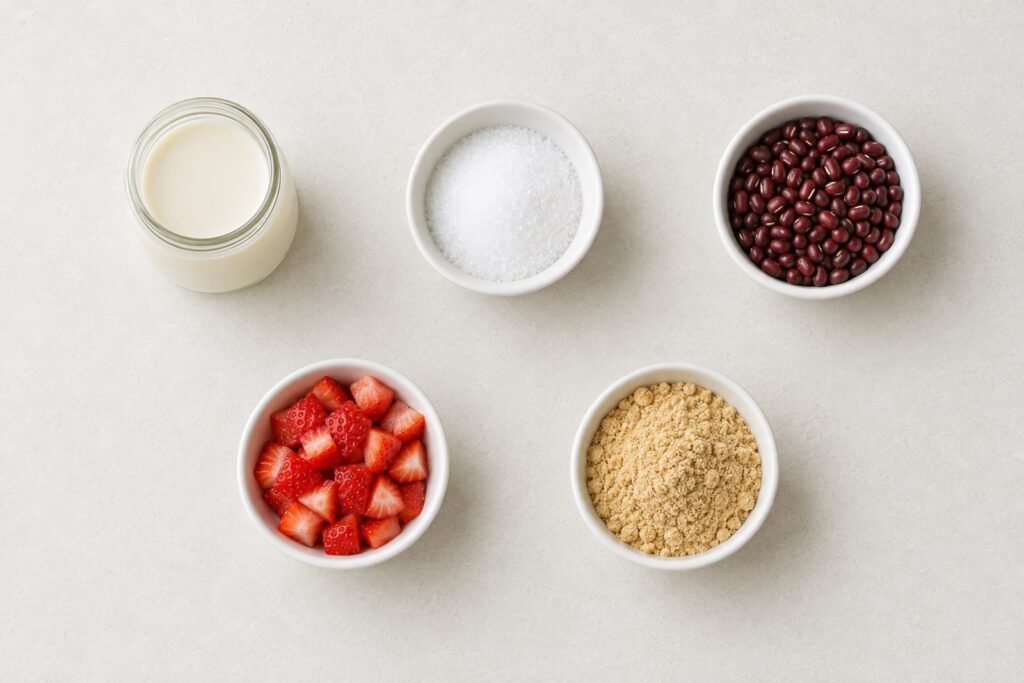
Unsweetened soy milk (3 cups / 720 ml). Plain, not vanilla. It freezes into a creamier ice than water and stands in for both the milk and the condensed milk. Check the label for soybeans and water near the top of the list. Dried adzuki beans (½ cup / 100 g). Small, deep-red beans, the traditional bean for patbingsu. They need no soaking. Buying note: Korean, Japanese and natural-food stores; canned sweetened red bean paste is a shortcut, but it carries more sugar. Roasted soybean powder (3 tbsp / 21 g). Sold as kinako (Japanese) or konggaru (Korean): soybeans roasted and ground to a nutty, golden flour. Buy the unsweetened kind. Strawberries (1 cup / 150 g). Any ripe fruit works; mango, banana and kiwi are common in Korea.
Scales every quantity and the servings count. The panel stays per serving.
3 cups(720 ml) unsweetened soy milk
2 tbsp(25 g) sugar, for the ice
½ cup(100 g) dried adzuki beans, rinsed
2 cups(480 ml) water, for the first boil
3 cups(720 ml) water, for simmering
⅓ cup(65 g) sugar, for the beans
¼ tsp(1.5 g) fine salt
1 cup(150 g) strawberries, hulled and diced
3 tbsp(21 g) roasted soybean powder (kinako or konggaru)
Method
Stir the soy milk and 2 tbsp sugar until the sugar dissolves. Pour into an 8-inch square metal pan and freeze, uncovered, 4 hours, until solid.
Meanwhile, put the adzuki beans and 2 cups water in a 3-quart saucepan. Bring to a boil and boil 5 minutes, then drain and discard the water.
Return the beans to the pan with 3 cups fresh water. Bring to a boil, then partly cover and simmer over low 60 to 75 minutes, until the beans crush easily between two fingers. Add a splash of water if they go dry.
Stir in the ⅓ cup sugar and the salt. Simmer uncovered 10 to 15 minutes, stirring and mashing about a third of the beans, until thick and jammy with little liquid left.
Cool the beans completely; they thicken as they cool. Put four serving bowls in the freezer to chill.
Let the frozen soy milk stand 5 minutes, then scrape across the surface with a fork into fine, fluffy flakes.
Pile the ice into the chilled bowls. Top each with a quarter of the red beans and strawberries, dust with the soybean powder and serve at once.
Cook’s note
Boiling the beans for 5 minutes and pouring off that water takes away their bitter edge, and the sugar goes in only once they are soft, because beans cooked in sugar from the start stay firm.
Storage
The sweet red beans keep 1 week in the fridge or 3 months frozen. The soy milk ice keeps 1 month in the freezer, covered; scrape it straight from frozen. Assembled patbingsu melts in minutes and does not keep.
Nutrition
Nutrition Facts
4 servings per recipeServing size 1 of 4 servings
Calories per serving265
% Daily Value*
Total Fat 4.5g
6%
Saturated Fat 0.5g
3%
Sodium 220mg
10%
Total Carbohydrate 46g
17%
Dietary Fiber 5g
18%
Total Sugars 25g
Protein 13g
26%
* The % Daily Value tells you how much a nutrient in a serving of food contributes to a daily diet. 2,000 calories a day is used for general nutrition advice.
How this panel was built
Every ingredient in this recipe is mapped to a USDA FoodData Central entry and the panel is computed from those entries for one serving as written. Optional ingredients and anything "to taste" are excluded. Values are rounded: protein to the gram, calories to the nearest 5 and sodium to the nearest 10 mg. The panel is calculated, not lab-tested; a different brand of stock or cheese will move sodium and fat. Cost per serving is an estimate at national-average store-brand prices; your store will differ.